How to celebrate St. Patrick’s Day like the Irish
Below, Dublin.ie takes a look at some old traditions which take place in Irish homes, as well as what to expect from the modern St. Patrick’s Day Festival, which takes place across Dublin every March.
St. Patrick’s Days past
There is a tendency, when you’re Irish, to take the celebrations of St. Patrick’s Day for granted – until you spend it somewhere else.
A couple of years ago, I was working in London’s Canary Wharf for St. Patrick’s Day. Looking out the window of a 15th-floor office, the only break of green in the glass and steel metropolis was some hastily painted shamrocks on the windows of an empty pub across the street. With n’er a silly hat in sight, I was never more Irish than I was that day, listening to ‘Raglan Road’ in my cubicle.
Growing up, St. Patrick’s Day was the day to break Lent and crack open the sweet jar. A day for your granny to cut a length of emerald green satin ribbon and tie it in your hair. A day to have shamrock, replete with a lump of muck, pinned about your person.
It was a day to stand on the side of the street and have sweets thrown at you from a tractor-drawn float. A day to attempt a bit of an Irish dance or try your hand at an old tune about leaving Ireland and coming home again.
Dublin’s St. Patrick’s Day Festival
And what does Dublin have to offer on St. Patrick’s Day these days? Well, it’s not just a day; it’s a five-day festival with dozens of events put together by over 3,000 artists. So, you’ll need to pace yourself.

Every year, Dublin’s St. Patrick’s Day festival has a theme. In 2022, the theme was connections and, in 2018, it was Home. Exploring this theme then provides inspiration for the artists and organisers involved in arranging the programme of events.
Past programmes have included commissioning film projects, street theatre, talks, walks, spoken word poetry, literature, music, Irish language, visual art and much more.
The Parade is the star of the show
Each year, the festival’s highlight is, of course, the national St. Patrick’s parade. Ireland’s leading street theatre and pageant companies adopt that year’s theme to come up with magnificent creations and flamboyant performances. They then weave their way through the capital in spectacular fashion.
100,000 tourists will arrive in Dublin for the day itself and 500,000 onlookers usually line the route. Parade bands from far and wide deliver dazzling rhythms and uplifting musical scores that will reverberate throughout the streets during the procession.
Those in attendance can cheer along with the hundreds of thousands of people who make the atmosphere at the parade something to remember.
Guests of honour
A recent addition to the proceedings is the International Guest of Honour.

Liam Cunningham, Grand Marshall in 2018.
Each year, the St. Patrick’s Festival appoints a well-known face to watch the parade alongside Ireland’s President of the day.
Mark Hamill, best known for his role as Luke Skywalker in Star Wars, watched from the presidential stand in 2018. Then, Irish-American comedian/actor, John C. Reilly, took up the role in 2022.
Each year, a local star leads the festival parade too.
The likes of actor Liam Cunningham, comedians Jason Byrne and Deirdre O’Kane, paralympian Ellen Keane and boxer Kellie Harrington have all led the lengthy parade through the streets of Dublin.
The rest of the St. Patrick’s Festival
If the parade itself, with its flasks of tea, finding a decent viewing spot and the giddiness of small children wanting up on your shoulders isn’t for you, there are other ways to engage in the celebrations too.
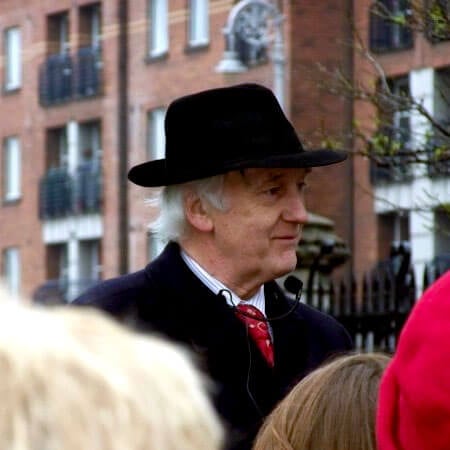
St. Patrick’s Day has become an arts festival with large-scale participatory events. These include the 5k road race for energetic festival-goers; the Big Day Out street carnival on Merrion Square; the ‘In the Footsteps of St. Patrick’ walking tour led by Dublin historian Pat Liddy; or any of the other many smaller cultural events dotted around the city.
With plenty of concerts, family-friendly activities and Irish language events, there’s something to please everyone.
As well as expanding the programme’s activities, the footprint of Dublin’s St. Patrick’s Festival has also expanded beyond the reach of the city centre.

Fingal County Council and other Dublin authorities host smaller, local parades to mark the occasion, as well live music events and family activities at local community centres.
Fingal also stage the greening of St. Patrick’s Island and a fireworks display. Based off the coast of Skerries, this event illuminates the place where St. Patrick first set foot in Ireland, as well as the site of his first monastery. The monastic ruins are bathed in vibrant green and remain lit throughout the St. Patrick’s weekend every year.
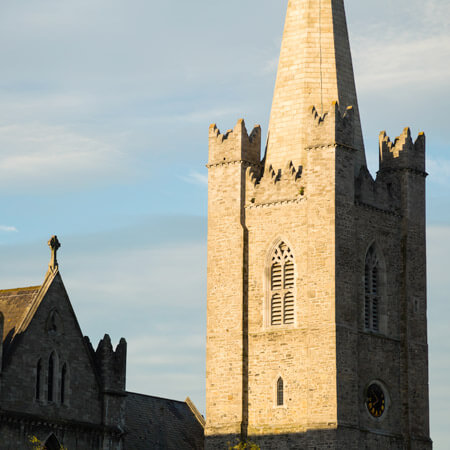
Once the sun goes down, you can also take a stroll through Dublin’s historic streets and see just how many iconic Dublin buildings, venues and spaces have ‘gone green’, especially lit for the duration of the festival.
For a full list of events at the next St. Patrick’s Festival, see the official website.