As an export-driven economy on the periphery of Europe, Transport and Logistics is a vital sector in Dublin. This is particularly significant for the increasing number of global enterprises establishing their European and EMEA headquarters in the city.
Exceptional connectivity with Europe, the UK and the US is one of many factors that attract foreign investment to Dublin. Sustained economic expansion and the increasing complexity of supply chains continue to drive demand for skilled professionals in the transport and logistics industry.
Major state investment in transport and logistics infrastructure positions Dublin to effectively meet the demands of this expanding sector.
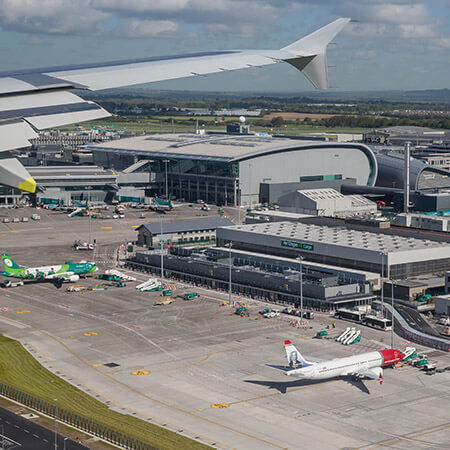
Dublin Airport, which handles more than 65% of Ireland’s air traffic annually, is the country’s principal international transport gateway for trade, inward investment and tourism. To ensure Ireland’s connectivity keeps pace with economic growth, the Dublin Airport Authority continues to invest in long-term infrastructure projects that strengthen capacity and support future demand.
The Dublin Port Company’s Masterplan for 2040 is advancing its Third and Final Masterplan (3FM) Project, aiming to complete the port’s development by 2040. This €450 million initiative will deliver 20% of the capacity required, including the construction of new Lift-on Lift-off (Lo-Lo) and Roll-on Roll-off (Ro-Ro) freight terminals. A key component is the development of the Southern Port Access Route (SPAR), featuring a new bridge over the River Liffey to divert port and commercial traffic from surrounding roads.
Freight and logistics activity in Ireland is showing renewed strength. In 2025, the country’s Logistics Confidence Index increased to 52.2, with one in seven logistics providers and buyers of supply chain services expecting turnover to grow in the coming year. The report also indicated renewed investment and expansion across the sector, with 64% of Logistics Operators expecting increased headcounts in the same period.
Some of the leaders in this sector
Ready to discover more of the key industry sectors that attract businesses from around the globe to Dublin?