This event has ended
Oak Room, Mansion House, Wednesday 25th June
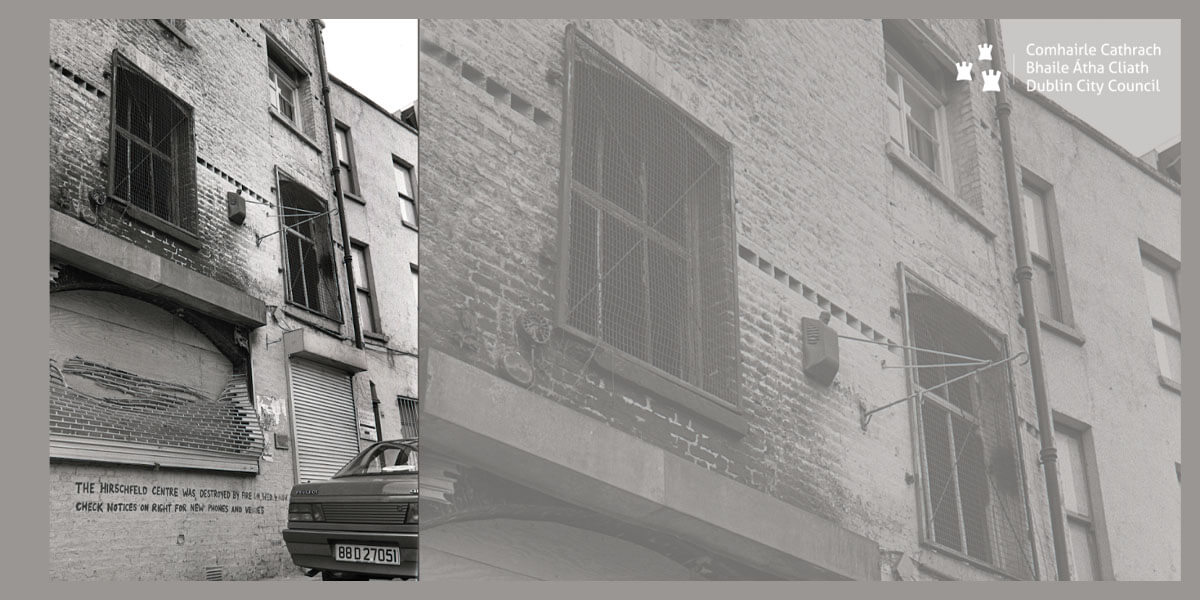
On St. Patrick’s Day in 1979, the Hirschfeld Centre opened its doors at 10 Fownes St in Dublin and became one of the most significant institutions in queer Irish history. Despite operating for only eight years, the political, social and cultural activities of the Hirschfeld made it a key space for an emerging queer community and an important site for the development of queer Irish culture. In the decades since its closure after a fire in 1987, the Hirschfeld has functioned as a site of individual and collective remembering. Drawing from oral histories, memoirs, and archival research, this talk highlights the Centre as a site of ambivalence—a place where queer joy flourished alongside experiences of marginalization and loss. The Centre functioned as an engine of political transformation, housing the National Gay Federation (NGF) and other activist groups that campaigned for homosexual law reform and provided support during the HIV/AIDS crisis. Yet, the Hirschfeld was also a social and cultural hub. Flikkers, its groundbreaking disco, fostered a queer cosmopolitanism, connecting Dublin to the global gay scene while providing a safe, celebratory space for local LGBTQ+ individuals. The Centre nurtured chosen families and built community resilience against the violence and surveillance that characterized Irish queer life at the time. Ultimately, the Hirschfeld Centre emerges as an ephemeral archive—a space whose material presence was lost to fire in 1987, but whose emotional and political legacies continue to shape Irish queer historiography. By celebrating this intersection of joy and loss, this talk underscores the Hirschfeld Centre's enduring place in the story of Irish LGBTQ+ resistance, resilience, and community formation.
This talk forms part of the Oak Room Heritage Talk Series, created by Dublin City Council's Heritage Office as an action of the Dublin City Strategic Heritage Plan 2024-2029. It is part-funded by the Heritage Council.
- Date:
- Wednesday 25th June
- Time:
- 6.00pm
- Price:
- Free
- Address:
- The Mansion House, Dawson Street, Dublin 2, Ireland