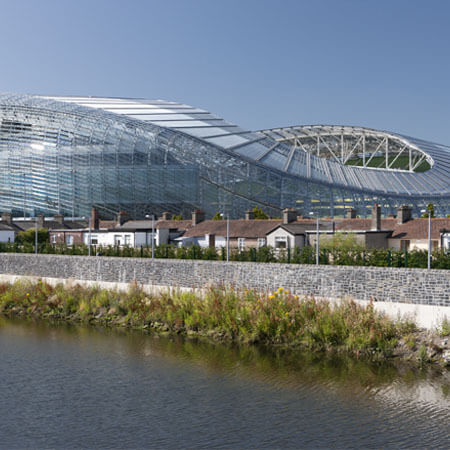
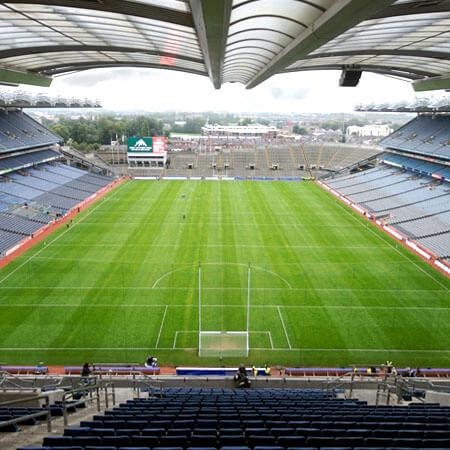
Dublin is delighted to be hosting seven UEFA EURO 2028 matches at Dublin Arena in June 2028, the city and country will come alive for football as Ireland hosts its first ever major football tournament!
The dates
The Dublin matches will take place on the following dates:
- Saturday 10th June 2028
- Monday 12th June 2028*
- Friday 16th June 2028*
- Monday 19th June 2028
- Wednesday 21st June 2028*
- Tuesday 27th June 2028
- Friday 30th June 2028
*should the Republic of Ireland qualify directly for the tournament, they will play their three group games in Dublin on these dates.
You can download the full tournament schedule(PDF).
The kick-off times will be confirmed afer the final draw takes place in December 2027. UEFA have confirmed there will be three kick-off times across the tournament, 14:00. 17:00 and 20:00 (Irish time).
Tickets will go on sale after the final draw has taken place and the group stage fixtures are confirmed, more details will be announced in autumn 2027.
The venues
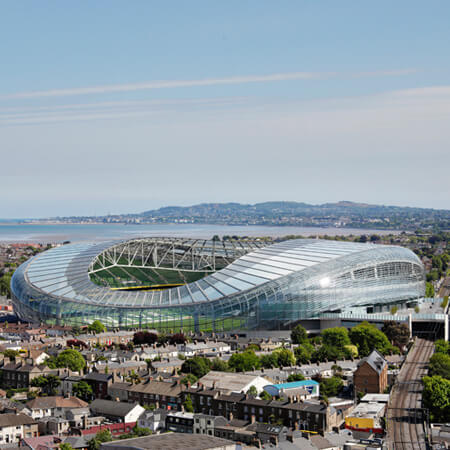
UEFA EURO 2028 will take place in Ireland and the UK. The joint bid from Ireland, Northern Ireland, England, Scotland and Wales was appointed by the UEFA Executive Committee in October 2023.
Nine stadiums will host matches, including Dublin Arena, Wembley, Glasgow’s Hampden Park and the National Stadium of Wales. Around three million tickets will be made available for fans and the general public.
Cardiff: National Stadium of Wales
Dublin: Dublin Arena
Glasgow: Hampden Park
Newcastle: St James’ Park
Manchester: Manchester City Stadium
Liverpool: Everton Stadium
Birmingham: Villa Park
London: Tottenham Hotspur Stadium
London: Wembley Stadium
The format
The format remains the same as the one used since UEFA EURO 2016 – 24 teams will enter the group stage, with the top two in each of the six groups proceeding to the round of 16 along with the four best third-placed finishers. From then on, it’s a straight knockout.
The path to the final is pre-determined, allowing participating teams to anticipate their potential routes to the final.
There is a new consolidated format for qualifying, with teams drawn in 12 groups of four or five teams who play each other home and away. The qualifying group stage will begin in March 2027 and will end in November 2027.
Group winners will qualify directly for EURO 2028, while runners-up will either qualify directly or participate in play-off matches with UEFA Nations League teams. The play-off round will be played in March 2028.
As hosts, Ireland, England, Scotland and Wales will enter the qualification process as normal. Two places in the final tournament are reserved for the hosts that do not qualify directly via the qualifying group stage, including any that qualified for the play-offs. If more than two host association teams do not qualify directly, the two places are allocated to the two highest-ranking of those host association teams, based on the overall European Qualifiers rankings.