Dublin has firmly established itself as a global centre for financial services, particularly in fund administration, aircraft leasing, insurance, and wholesale banking.
A growing number of leading financial institutions have chosen to base key operations in Dublin, drawn by Ireland’s strong regulatory framework, deep talent pool, and consistently pro-business environment.
Ireland is now ranked 6th globally and 4th in the EU for financial services exports, with 22 of the world’s top 25 financial services firms, 21 of the top 25 banks, and eight of the top 10 global insurers operating here.
The country offers a competitive 12.5% corporate tax rate and one of the world’s most comprehensive networks of double taxation agreements, with 78 treaties signed and 75 currently in effect.
The country is also home to around 600 international financial services companies, employing over 60,100 people. It is also the third-largest domicile for investment funds, with €4.5 trillion in assets under management, and hosts approximately 70% of European Exchange Traded Funds (ETFs).
Aviation leasing
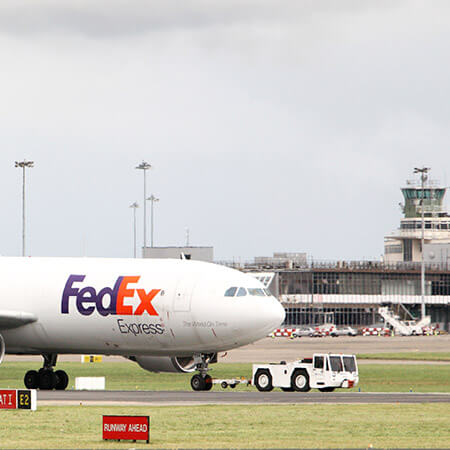
Aviation leasing is an area in which Dublin is particularly successful. Ireland’s share of the global leasing market stands at over 60%. As a result, more than half of the world’s aircraft are now owned and managed in Ireland.
The Irish Financial Services Centre
Based in the heart of Dublin, the centrality of the Irish Financial Services Centre is a key reason for the concentration of financial institutions in the capital. The Irish government established the IFSC in 1987 in order to centralise a range of internationally traded financial services – banking, fund management and specialised insurance. Since then, the IFSC has continued to expand.
Today, the adjacent Docklands area of the city has become an extension of the IFSC. It now spans both north and south of the River Liffey and as far east as the 3Arena. Over 500 firms operate within this area, including more than half of the world’s top 50 banks and top 20 insurance companies.
Foreign Direct Investment
Ireland remains among the top 10 most attractive European destinations for foreign direct investment (FDI), with Dublin playing a central role. Ireland’s FDI sector is a cornerstone of its economy, contributing to 11% of national employment and injecting over €38 billion annually. The country’s FDI intensity has reached 256% of GDP, second only to Luxembourg within the OECD. This extraordinary success is driven by the country’s political and economic stability, clear policy direction, competitive corporate tax regime, and strong trade ties with both the EU and US.
Ireland’s position as a global investment fund powerhouse continues to grow, with the country now recognised as the fastest-growing major European fund domicile, holding 20.1% of all European fund assets. Globally, Ireland ranks as the third-largest centre for investment fund assets and second within Europe, accounting for 6.5% of worldwide fund assets.
Companies in financial services sector include: