‘Admirals for a Day’: Reading and discussion

This event has ended

Online, Wednesday 5th May

Cormac O’Malley will read an unpublished humorous but historic vignette written in 1935 by his War of Independence father, General Ernie O’Malley, called ‘Admirals for a Day’.

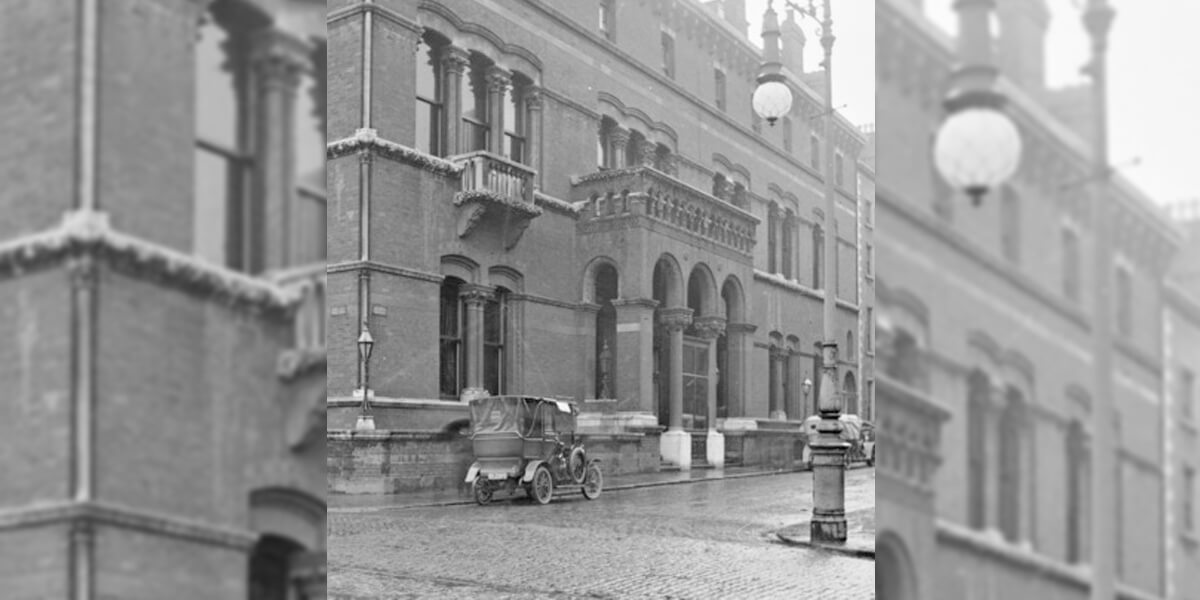
Following the reading, Cormac O’Malley and Charles Lysaght will discuss the takeover of the Kildare Street Club (KSC) by Republican soldiers in May 1922 just before that start of the civil war. They will then talk about the background of the Kildare Street Club, what happened in the immediate aftermath of the takeover and how the Free State government reacted to those events including compensation. The conversation will be moderated by Dr Sandra Collins, Director of the National Library of Ireland.
Date:
Wednesday 5th May
Time:
7.30pm
Price:
Free

You might also like...

What's on

Irish Famine Exhibition

Stephen's Green Shopping Centre

The Irish Potato Famine was the most catastrophic event in Ireland's turbulent history. It is also regarded as being one of the worst Famines in history (deaths as a proportion to population). The use of the word 'Famine' in this context is controversial, for Ireland at the time was part of the richest Empire in the World (the British Empire). There was sufficient food in the country throughout the 'Famine' years, yet over a million people died from starvation and disease, and millions more were forced to flee. This Exhibition tells the story of what happened during those horrific years. W

What's on

One Dublin One Book

Dublin

Christine Falls by John Banville is the One Dublin One Book choice for 2026, following on from Dublin Written in Our Hearts, an anthology, chosen for 2025. One Dublin One Book aims to encourage everyone in Dublin to read a designated book connected with the capital city during the month of April every year. This annual project is a Dublin City Council initiative, led by Dublin City Libraries and Dublin UNESCO City of Literature, which encourages reading for pleasure. The author introduces us to the maverick pathologist Quirke whose only passion is finding truth in science. While readers

What's on

Manuals of Immorality: Censoring publications in twentieth-century Ireland

Wood Quay Venue

The scale and ambition of the Irish censorship regime is preserved in a blacklist of over 12,000 publications. From 1930 to 2016, the censorship board banned all manner of printed material. Sex education manuals, pulp fiction, nineteenth-century pornography, celebrity memoirs, and newspapers and magazines appear alongside literature from the greatest twentieth-century writers. This state censorship emerged from the report of the Committee on Evil Literature (1926), which gathered opinions from churchmen of all persuasions, newsagents, charities, trade unions and civil servants. The moral attit