Dublin’s Railway Architecture

This event has ended

Oak Room, Mansion House, Wednesday 23rd April

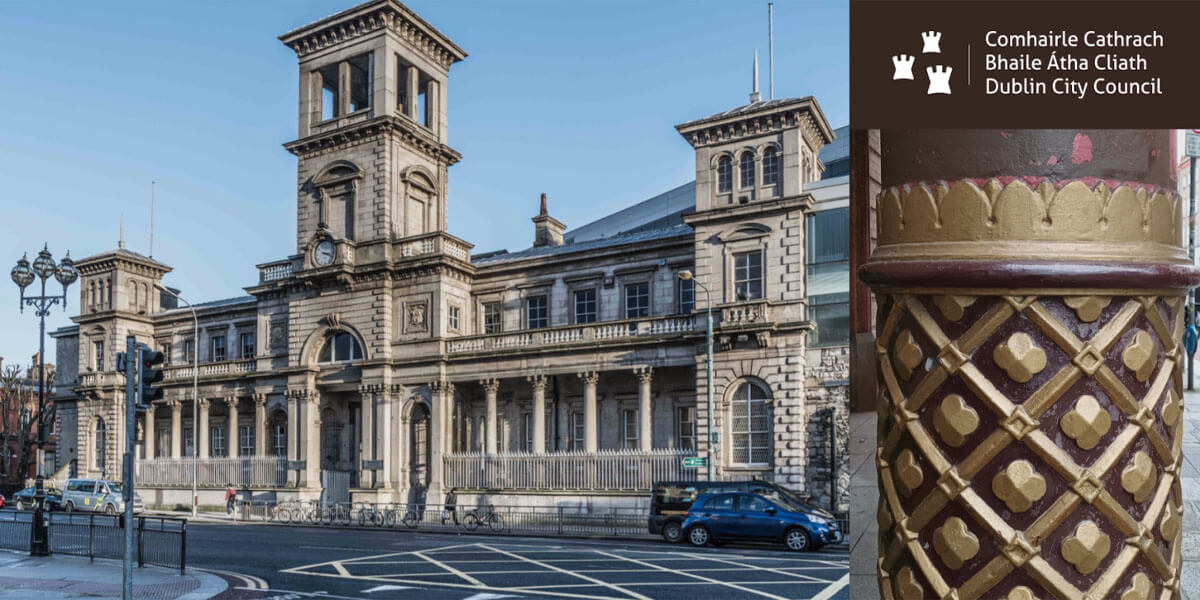
On Wednesday 17 December 1834 the first passenger railway line in Ireland opened as the Dublin and Kingstown Railway Company, with its central termini at Westland Row. Over the next four decades thousands of miles of railway tracks were spliced through Ireland’s landscape, creating an expansive web of public connectivity and human endeavour. Ireland’s capital city further gained a total of five terminal railway stations: Harcourt Street, Broadstone, Heuston, and Connolly, with each demonstrating the style and ambition of each respective railway company. Join this talk to find out more about the history of railway development in Dublin through the architecture of its terminal stations, the architects and engineers who designed them, and the Irish manufacturers and builders who made them manifest.

This talk forms part of the Oak Room Heritage Talk Series, created by Dublin City Council's Heritage Office as an action of the Dublin City Strategic Heritage Plan 2024-2029. It is part-funded by the Heritage Council.


Date:
Wednesday 23rd April
Time:
6.00pm
Price:
Free
Address:
The Mansion House, Dawson Street, Dublin 2, Ireland
Google Map of The Mansion House, Dawson Street, Dublin 2, Ireland
You might also like...

What's on

Pint of Science Festival

Various Locations

Pint of Science brings some of the most brilliant scientists to your local pubs and cafes to discuss their latest research and findings with you. You don't need any prior experience, and this is your chance to meet the people responsible for the future of science (and have a drink with them). The festival runs over a few days in May every year, but we occasionally run events during other months. Pint of Science Ireland will be hosting our 2026 festival on May 18th, 19th and 20th. Topics for the festival include: Beautiful Mind - neuroscience, psychology, and psychiatry Atoms to G

What's on

“The Diversity Within”: Representations of Fairground Travellers and Showpeople in Irish Tradition

Wood Quay Venue

In recent decades, particularly when viewed through a media lens, Irish Travellers have been frequently depicted as a single homogenous group of people, all of whom share the same cultural traditions and history. This narrative is partly a remnant of colonial discourse whereby all Irish Travelling people and nomadic groups were “classified” as one and the same -e.g. “masterless men and women”, “wandering Irish”, “wild Irish” etc. Under colonialism, administrators made little or no distinction between different cultural and minority groups who travelled for a living and the rest