This event has ended
Online, Thursday 22nd April
A Gap in the Clouds: Crafting a New Translation of Japan’s Most Important Poetry Collection
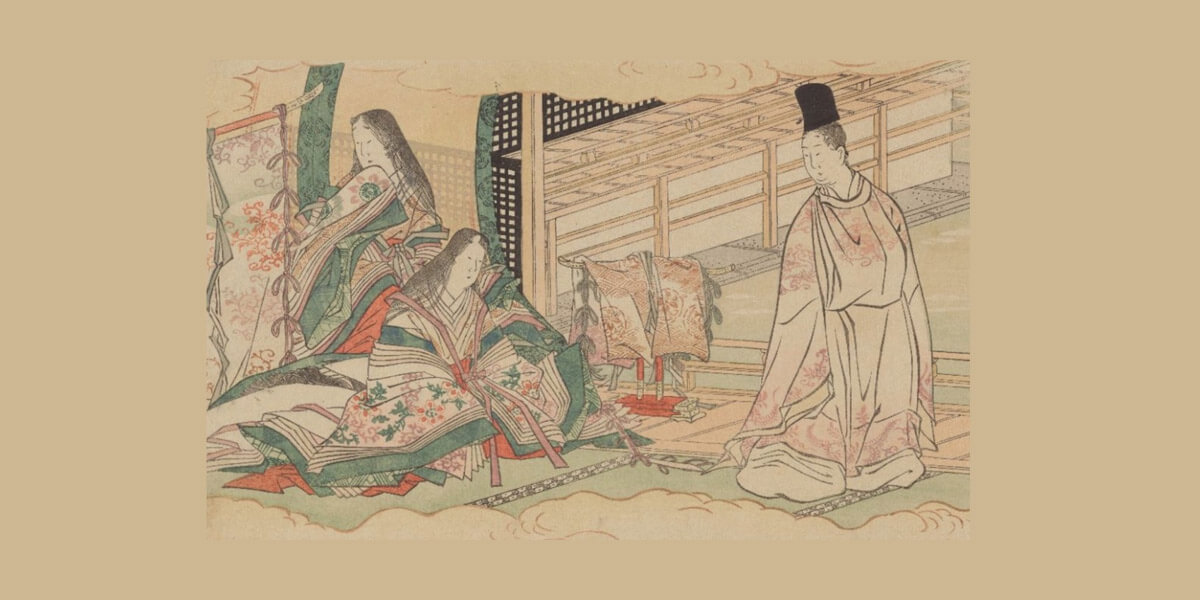
The Ogura Hyakunin Isshu, or Ogura’s 100 poems by 100 poets is one of the most important poetry collections in Japan. It was compiled around 1235 by Fujiwara no Teika, but its poems date from the 800s onwards, and its poets include emperors and empresses, courtiers and high priests, ladies-in-waiting and soldier-calligraphers. However, as James Hadley and Nell Regan note in their introduction to A Gap in the Clouds, A New Translation of the Ogura Hyakunin Isshu (Dedalus Press) ‘These beautiful poems have endured because their themes are universal and readily understood by contemporary readers’. Join them as they introduce their new book and read a selection of these tiny, exquisite poems.
Bio:
Nell Regan is a poet and non-fiction writer based in Dublin. She has published three collections of poetry: Preparing for Spring, Bound for Home and One Still Thing. Her awards include an Arts Council Literature Bursary, a Fellowship at the International Writing Programme, Iowa; and she has been a Fulbright Scholar at U.C. Berkeley, as well as Patrick and Katherine Kavanagh Fellow. Her biography Helena Molony, A Radical Life, 1883-1967 was Irish Independent 2017 Book of the Year. Her translations of the Irish language poetry of Micheál Mac Liammóir have been published in Poetry Ireland Review and Cyphers. She works freelance as an educator and literary programmer. Her recent collaboration with composer & musician Mary Barnecutt, supported by the Arts Council, has just been launched at www.eavesdrop.ie
James Hadley is Ussher Assistant Professor in Literary Translation at Trinity College Dublin. He is the director of the College’s master’s degree in Literary Translation, which is based at the Trinity Centre for Literary and Cultural Translation. After studying Japanese and Computing at the undergraduate level, and later Buddhism and Translation Studies at the master’s level, James completed a PhD in Translation Studies in 2013. Since then, James has become known as one of the leading theoretical researchers in indirect translation, or the translation of translations. James is a strong proponent of using computer-based tools in the production of translation research. James is also very interested in practices that stretch our casual assumptions about what translation is and how it functions.
- Date:
- Thursday 22nd April
- Time:
- 1.10pm
- Price:
- Free