Teatime Talks: ‘From ‘Mud Huts’ to ‘Garden Suburbs’: Workers’ Housing in the Docklands’ with Joe Mooney

This event has ended

Online, Wednesday 24th February

Teatime Talks is a series of talks inspired by the history, people and surroundings of 14 Henrietta Street. By listening and engaging with historians, experts, former tenement residents, local residents and their families, we continue to uncover, record and preserve the history and stories of 14 Henrietta Street and Dublin City. Do you have a memory of Dublin’s tenements or know someone who does? Whatever your connection, we would like to hear from you.

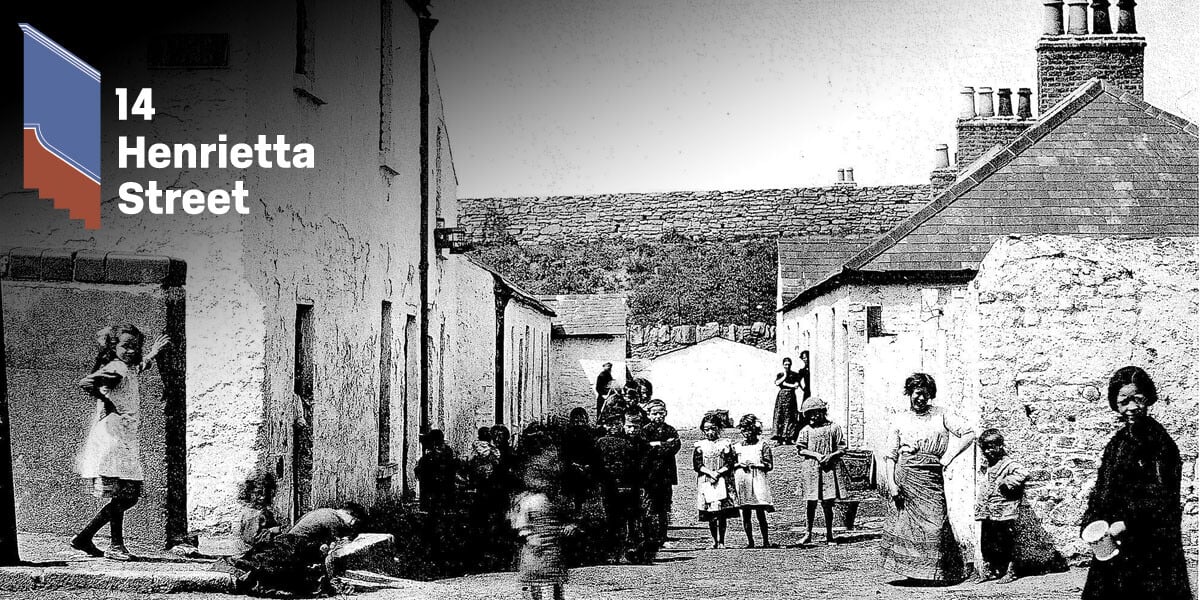
This talk will examine how workers housing in the Dublin docklands evolved, the social, economic and political changes that impacted the workers' lives and homes and what daily life was like for many of those who dwelt here. Dublin’s North Docks were built on reclaimed land. With the expansion of the Port and arrival of the railways in the mid 19th century, a variety of housing types were built for workers and their families. These ranged from ‘traditional’ tenement style housing, employer owned cottages and some described as ‘little better than mud-huts’. Many of the houses were built quickly and were of low quality, with cramped homes squeezed into small streets and alleys. Soon, some of the worst conditions in the city could be found here. In the 20th century, the area would welcome a pioneering Dublin Corporation housing estate with innovative flat-blocks, as the de-tenanting of slum housing became a priority for the Free State Government. This talk will examine how these housing schemes evolved, and the changing nature of life and living in the Dublin Docklands.

Joe Mooney is a long time community activist, a member of the East Wall History Group and a coordinator of the annual Sean O’Casey Festival.


Date:
Wednesday 24th February
Time:
7.00pm
Price:
Free

You might also like...

Cruinniú na nÓg 2020.

What's on

Cruinniú na nÓg

Various Locations

A day of free creativity for children and young people Ireland is the first, and only, country in the world to have a national day of free creativity for children and young people under 18. Cruinniú na nÓg is a flagship initiative of the Creative Ireland Programme’s Creative Youth Plan to enable the creative potential of children and young people. The inaugural Cruinniú na nÓg took place on 23rd June 2018 and for the past number of years, including under exceptional circumstances in 2020, young people and families have come together to enjoy, a wide range of creative activities includin

What's on

Ancient Manuscripts and the Psychology of Reading

Chester Beatty and Online

Dr Christoph Scheepers, Senior Lecturer in Psychology, University of Glasgow Research in the psychology of reading has traditionally centred on the cognitive processes involved in text comprehension. This includes exploring questions such as: “How do readers recognize words?”, “How do they integrate information at the word, sentence, and discourse levels to construct a coherent interpretation of the text?”, or “How do they resolve ambiguities at these various levels?”. Ancient manuscripts introduce an additional aesthetic dimension to these inquiries—an area that so far has

Bloomsday Festival - A literary carnival in honour of James Joyce and his famous novel, Ulysses, that was set in Dublin on June 16th, 1904.

What's on

Bloomsday Festival

Various Locations

Bloomsday celebrates Thursday 16 June 1904, the day depicted in James Joyce’s novel Ulysses. The day is named after Leopold Bloom, the central character in Ulysses. The novel follows the life and thoughts of Leopold Bloom and a host of other characters – real and fictional – from 8am on 16 June 1904 through to the early hours of the following morning. Celebrations often include dressing up like characters from the book and in clothes that would have been the style of the era. One of the hallmark fancy dress items of Bloomsday is the straw boater hat. Celebrations come in many differen