It is easy to think of sustainability as a series of corporate reports, especially with all the talk around new EU rules and complex environmental compliance.
But if you look beyond the boardroom, you’ll find a lively, hands-on movement happening in our own neighbourhoods. It’s a transition built on simple things: fixing up old bikes, upcycling furniture, and rescuing surplus food.
To see what this looks like on the ground, our first stop is Ballymun, home to Ireland’s National Centre for the Circular Economy.
From Boiler House to National Circular Hub
The Rediscovery Centre once a heavily polluting municipal boiler house that literally heated the old Ballymun flats, has been completely reimagined as Ireland’s National Centre for the Circular Economy.
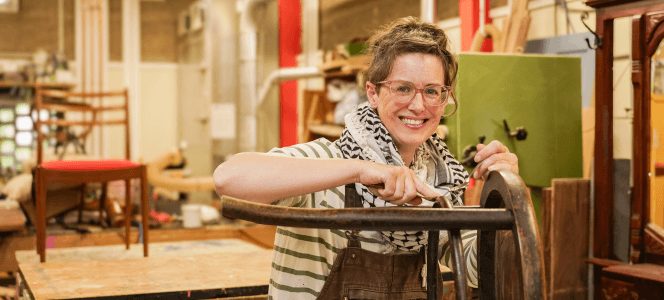
Nessa Doran O’Reilly, Rediscover Furniture
We repair, upholster, and upcycle pieces to keep quality furniture out of landfill, all while offering hands-on training to people distanced from the workplace. It gives me the chance to do work I’m deeply passionate about alongside an amazingly talented team.
It feels like a zero-waste playground. The centre features active upcycling workshops where paint, fashion, furniture, and bicycles are rescued from landfill – diverting over 100 tonnes of valuable waste materials every single year. Downstairs, a zero-waste café serves food made with ingredients grown on-site, including crisps crafted from rooftop potato skins.
The Rediscovery Centre proves that circularity is about creativity, joy, and the physical transformation of our urban waste streams.
Where Craft Meets Social Impact
Just a short trip across the Liffey, We Make Good pairs this zero-waste mindset with direct support for local communities.
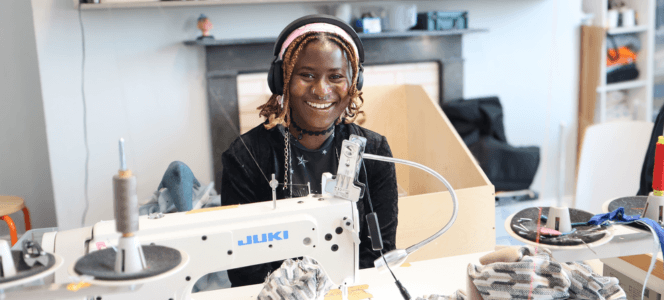
Naimot, We Make Good
They partner with some of Ireland’s most talented designers to create high-quality homeware, textiles, and gifts. But what makes their products truly special is who makes them. We Make Good provides jobs and skills training to people from marginalised backgrounds who face major barriers to finding work. For Sarah Verdon the shift from 15 years in luxury fashion to social enterprise was a natural one:
Beyond teaching sewing skills, we support people in rebuilding their confidence, independence, and place in the workforce.
They are not just saving fabrics from landfill – they are actively rebuilding lives and creating real social capital.
Turning Dublin into a Circular Hub in Motion
Head towards the coast of Dún Laoghaire-Rathdown and up into Fingal where the focus shifts to micro-mobility and resource preservation.
In Dún Laoghaire, The Bike Hub takes what the communities discard – rusted, abandoned, and donated bicycles – and breathes new life into them. This isn’t just about reducing metal waste; it is about democratising transport. By teaching community members how to repair their own bikes, they build local resilience and keep valuable materials in active service.
This spirit of collaboration is mirrored in Fingal through Second Spin, a brilliant partnership with the Rediscovery Centre. Second Spin focuses on refurbishing donated bikes to create equal transport opportunities for marginalised youth and local communities. It is a masterclass in how local authorities, social enterprises, and community volunteers can co-create practical climate solutions.
Smart Resource Management
Our next stop is Clondalkin, where the green transition feels less like a corporate policy and more like a busy, bustling neighbourhood hub. This is where Recycle IT and FoodCloud are doing the heavy lifting of Dublin’s circular movement.
Recycle IT takes on our discarded gadgets, computers, and white goods, diverting tonnes of e-waste from landfill. But their real magic is their community-first approach: they use this recycling engine to provide hands-on training and career opportunities for locals through community schemes.
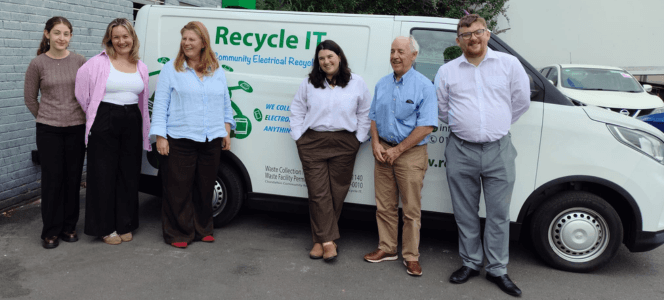
RecycleIT
Meanwhile, FoodCloud tackles a different kind of waste. Born from a student project at Trinity College, it has built a massive network that rescues surplus food and gets it straight to local charities.
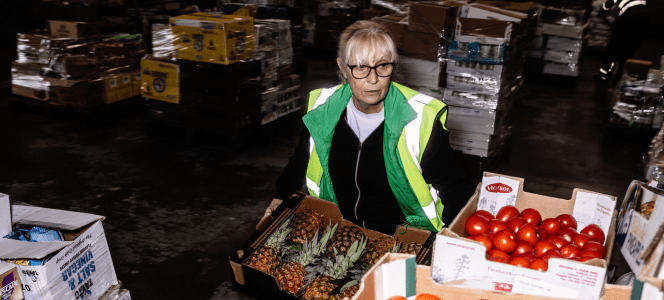
FoodCloud
Together, they prove that sustainable practices provide immediate social benefits – helping local households, creating fair jobs, and improving daily life across the capital.
From Inspiration to Action
It is easy to look at these social enterprises and think, “This is brilliant, but how does it work for my business?”
This is where the MODOS programme comes in. Run by Dublin’s local authorities, MODOS is a practical circular economy training programme designed specifically for SMEs.
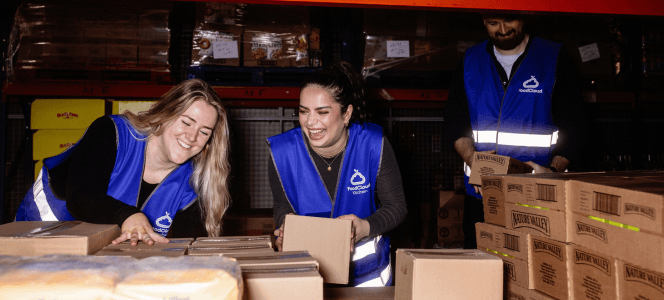
FoodCloud
Through the programme, Dublin businesses learn how to audit their operations to eliminate costly resource waste, design out waste from their products and services right from the start, and team up with local social enterprises to meet their environmental and social targets naturally.
By partnering with local circular heroes, businesses do not just tick a green box – they make their operations smarter and keep their supply chains close to home.
The Future of Dublin is Circular
Dublin’s circular economy cluster is far more than a collection of inspiring local projects – it represents a fundamental shift in how we value both resources and people. By seamlessly intertwining environmental responsibility with social equity and commercial viability, these organisations have built a practical blueprint for a genuinely sustainable region.
Support our social enterprises by choosing their products and services, integrate circular design principles into your own business operations, or sign up for practical training programmes like MODOS to lead the change.
Every choice, no matter how small, helps shape a fairer, cleaner, and more resilient Dublin for everyone.