This event has ended
Online, Wednesday 10th February
Teatime Talks is a series of talks inspired by the history, people and surroundings of 14 Henrietta Street. By listening and engaging with historians, experts, former tenement residents, local residents and their families, we continue to uncover and record the history and stories of 14 Henrietta Street. Do you have a memory of Dublin’s tenements or know someone who does? Whatever your connection, we would like to hear from you.
The makings of the people's game – Football in Dublin 1880-1970
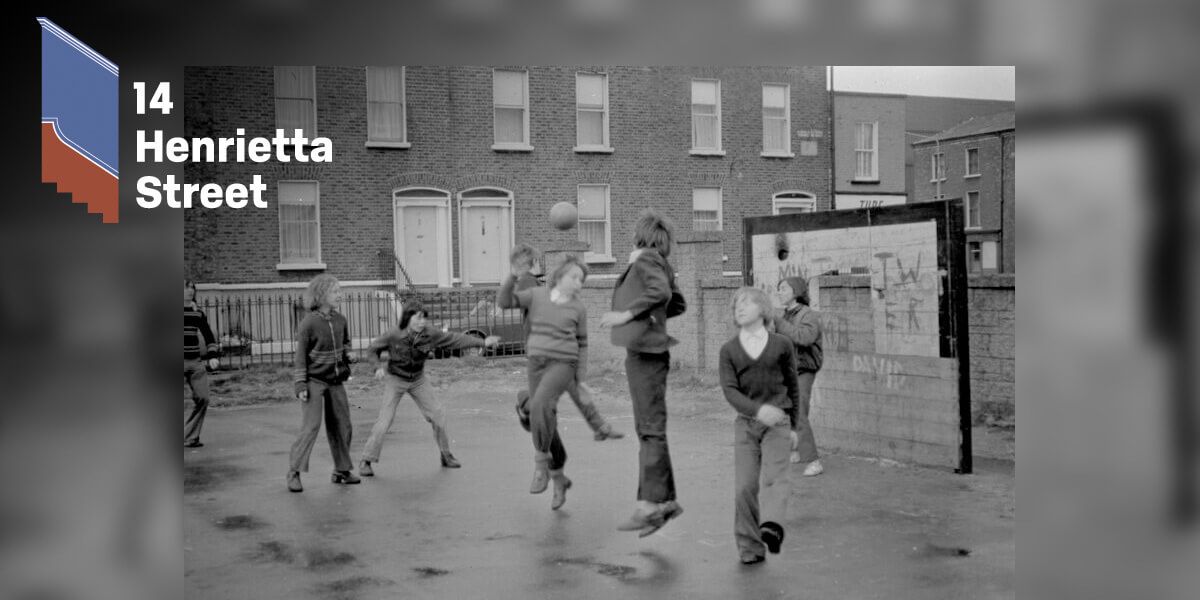
In this online talk, Gerard Farrell of the Bohemian Foundation talks about one of Dublin’s most popular pastimes. Initially emerging as a minority pursuit in the city's elite schools and universities in the 1880s, football in Dublin enjoyed spectacular growth as both a game to be played and one to be watched and enjoyed. By the early 20th century, with the foundation of many of the city's major clubs, soccer began to enjoy mass popular appeal.
The game was suited to urban environments, the city's tight lanes and hard surfaces developed players of skill, cleverness and technique which created generations of great footballers. It was also the most egalitarian of games, all you needed was a ball (which was often fashioned out of rags or balled up newspapers) and a pair of jumpers for goalposts. This is the story of Dublin and how it grew to love the beautiful game.
Our speaker, Gerard Farrell is a Dublin based football enthusiast and historian with an interest in League of Ireland, the Irish National Team, and the wider social significance of the game. He runs the “A Bohemian Sporting Life” blog and podcast and also contributes to the Bohemian FC website and programme, the Irish national team match programmes, the official League of Ireland website and various other football websites, journals and publications.
The Bohemian Foundation is an independent non-profit organisation intent on improving the health and well-being of its North Dublin community. The Foundation runs its own initiatives but also collaborates with Dublin City Council and others in a range of activities towards the shared objectives of improved health, well-being, community development and social inclusion.
The Talk will take place online using Zoom, a free online meeting platform. You will need an internet connection and a compatible device (e.g. computer, laptop, iPad, tablet, phone) to access Zoom.
- Date:
- Wednesday 10th February
- Time:
- 7.00pm
- Price:
- Free