Dublin’s economy is diverse and globally connected, making it a perfect location for companies at every stage of growth, from startups to established multinationals. Its highly supportive, business-friendly environment is designed to help enterprises scale with confidence.

While Dublin welcomes businesses across all industries, several sectors consistently attract the highest levels of foreign direct investment (FDI). These include:

Companies operating in these priority sectors benefit from tailored supports, including access to a skilled talent pool, specialised service providers, collaborative networks, and purpose-built infrastructure.

Startups continually succeed and grow with an ecosystem of accelerators, mentors, and R&D centres, while multinationals can use the efficient supply chains, global connectivity, and Dublin’s reputation as a trusted European base.

How does the future look for these key industries?

Economic expansion in Ireland remains strong, driven in large part by sustained investment from international companies, and Dublin sits at the heart of this continued growth. The city was recently ranked first for Economic Potential in fDi Intelligence’s Major European Cities of the Future 2025, rising from second place the year prior. It also ranked third for Business Friendliness, seventh for FDI Strategy, and second overall.

These rankings continue to affirm Dublin’s standing as one of the most attractive and forward-looking investment destinations in Europe.

If your business operates in one of Dublin’s six key sectors, explore the resources below to discover the advantages and success stories tied to your industry
invest

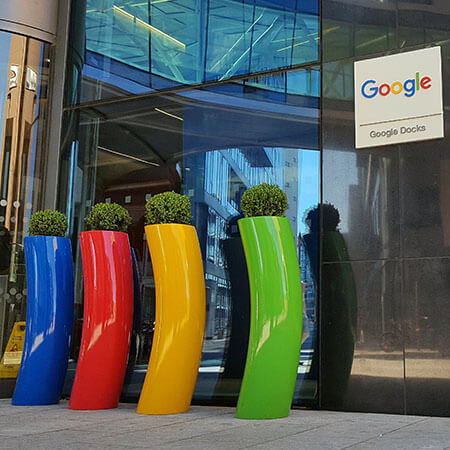
Tech: Why companies invest in Dublin

Dublin has emerged as one of the most dynamic technology capitals in Europe. For decades, Ireland has cultivated an environment that not only welcomes global tech firms but also enables them to scale. Today, the results speak for themselves: 16 of the top 20 global tech giants, including Apple, Amazon, Google (Alphabet), Meta, Microsoft, and Intel, have a strategic presence in Ireland, with many choosing Dublin as their European base of operations. This is not a recent phenomenon. In fact, the foundations were laid over half a century ago. IBM became the first Am

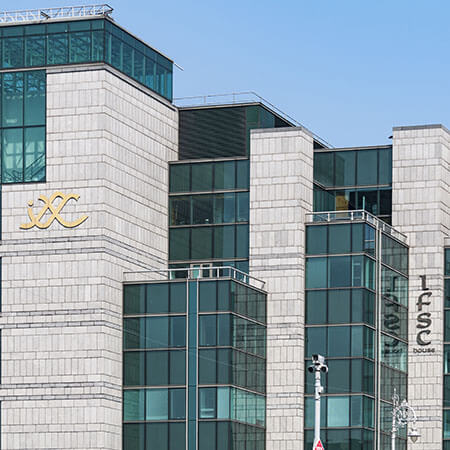
brick and glass skycrpaer buildings in the irish financial services centre in dublin's docklands

invest

Financial services in Dublin

Dublin has firmly established itself as a global centre for financial services, particularly in fund administration, aircraft leasing, insurance, and wholesale banking. A growing number of leading financial institutions have chosen to base key operations in Dublin, drawn by Ireland’s strong regulatory framework, deep talent pool, and consistently pro-business environment. Ireland is now ranked 6th globally and 4th in the EU for financial services exports, with 22 of the world’s top 25 financial services firms, 21 of the top 25 banks, and eight of the top 10 global insurers

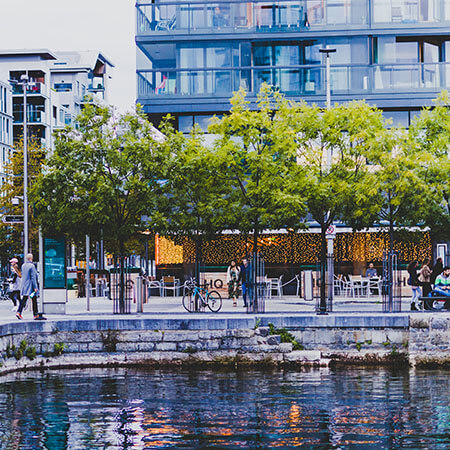
image of waterfront and trees at dublin's business services district

invest

Professional services

As international investment in Dublin continues to expand, the appetite for high-quality professional services is also increasing. Since the early 1990s, Dublin has seen sustained growth in demand for professional and functional support services, driven by multinational companies centralising their operations in the city. This has established Dublin as a hub for key sectors such as legal services, accounting, R&D, marketing, real estate, and management consulting. Today, Dublin is a centre of exc

invest

Life sciences

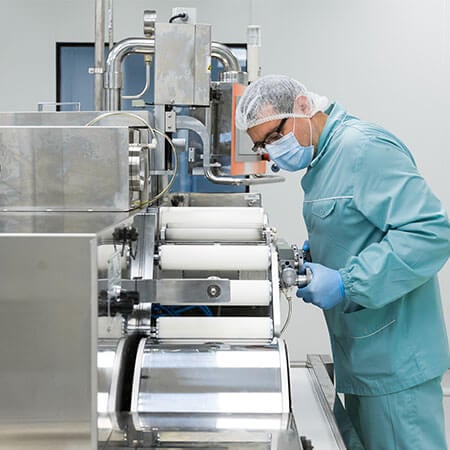
Ireland is firmly established as a global leader in life sciences and pharmaceuticals and is currently the third-largest exporter of pharmaceuticals in the world, with annual exports exceeding €116 billion. The sector is also a major employer, with 45,000 people working in IDA client companies across life sciences. Ireland’s

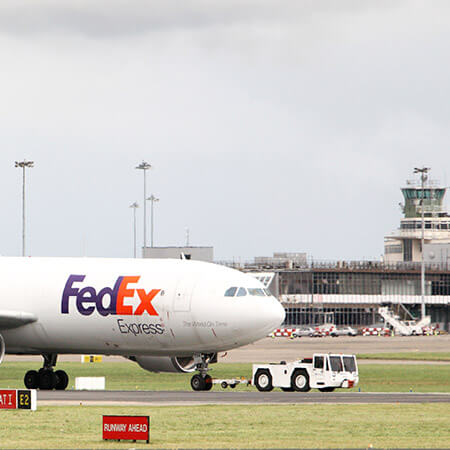
fedex transport plane on runway

invest

Transport and logistics

As an export-driven economy on the periphery of Europe, Transport and Logistics is a vital sector in Dublin. This is particularly significant for the increasing number of global enterprises establishing their European and EMEA headquarters in the city. Exceptional connectivity with Europe, the UK and the US is one of many factors that attract foreign investment to Dublin. Sustained economic expansion and

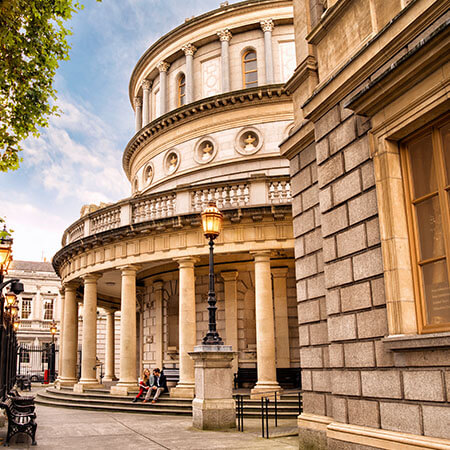
the sand coloured building of the national library of ireland which is a leader in the arts and recreation sector

invest

Arts and recreation

While Dublin’s arts and recreation sectors are not the primary drivers of foreign direct investment (FDI), they are critical to the region’s appeal among global investors. Dublin is internationally recognised for its cultural heritage, arts scene, and year-round calendar of events, from world-class museums and galleries to cutting-edge