Opening a bank account in Ireland
To receive your salary, you’ll probably need to open an Irish bank account. Most Irish employers won’t deposit your pay into a foreign account, so you’ll need to do it as soon as you get a job. This is just part and parcel of living in Dublin.
You can set up an account online or in person. Either way, you’ll have to wait until you arrive in Ireland to open your bank account.
Due to anti-money laundering legislation, most Irish banks will want to meet you before finalising your account. So this is one situation where doing it online isn’t necessarily quicker.
The big retail banks in Ireland are:
The guidance below reflects the process of opening an account in Ireland at one of these banks.
1. Opening an account in person
Opening a bank account in Ireland is reasonably straightforward. You’ll need two documents – a valid form of photo ID and a document to prove your address.
Photo ID can include:
- Your passport.
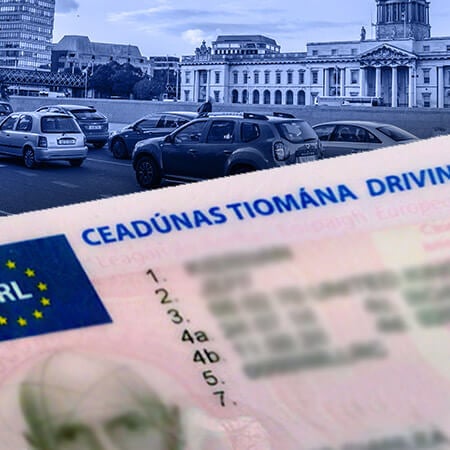
- Your driving licence
- A national identity card – this one’s for EU citizens only

Proving your address can be a bit trickier. You’ll need one of the following:
- A utility bill from the past 6 months.
- A bank statement from the past 6 months.
- A letter from a government department that shows your address.
If you’ve just arrived in Dublin and don’t have a document to prove your address, most banks will accept a utility bill, bank statement or government correspondence with your previous address in another country. However, some banks may ask you to provide two of these documents as extra proof.
In some cases, you may even be asked to provide a character reference or give the bank access to your financial history.
2. Opening a bank account online
The last decade has seen the launch of a number of fintech companies offering online banking services. These providers do not have brick-and-mortar branches; instead, all of their services are accessed via mobile apps. N26 and Revolut are two such examples. Both hold banking licences (from Germany and Lithuania, respectively), which means that customers’ deposits are protected up to a specified value.
These companies also offer streamlined processes for transferring money to friends and family, as well as converting currencies and investing in stocks, ETFs, or cryptocurrencies. As always, it is advised that anyone considering these services should do their due diligence before setting up an account.
Opening a credit union account
A credit union is a financial institution that is owned by its members. The Irish credit union movement began in the 1950s when concerned citizens sought ways to help working people gain better control over their finances. Today, the credit unions within the Irish League of Credit Unions hold €18 billion worth of savings.
A credit union can perform many of the same services as a bank, offering current accounts, savings accounts, loans and all sorts of insurance. They also offer their members special accounts to help them keep to a budget.
As with opening a bank account, you’ll need photo ID and proof of address to join your local credit union. Sometimes, you might be asked for evidence of your PPS number too. (If you haven’t gotten one yet, find out how in our moving to Dublin guide).
Because credit unions are local, community-based organisations, you can’t just join whatever one you want. You’ll need to join one associated with your local area or your workplace. Find your closest credit union here.